
Sciatica Treatment in Columbus, GA
Personalized Care for Sciatic Nerve Discomfort
Sciatica can cause pain, tingling, numbness, or weakness that travels from the lower back through the buttock and down the leg. These symptoms can make everyday activities like sitting, standing, walking, and sleeping more difficult.
At Premier Chiropractic, we evaluate factors that may be contributing to your symptoms and develop an individualized care plan based on your needs, condition, and health goals. Our goal is to help you move more comfortably and get back to the activities you enjoy.
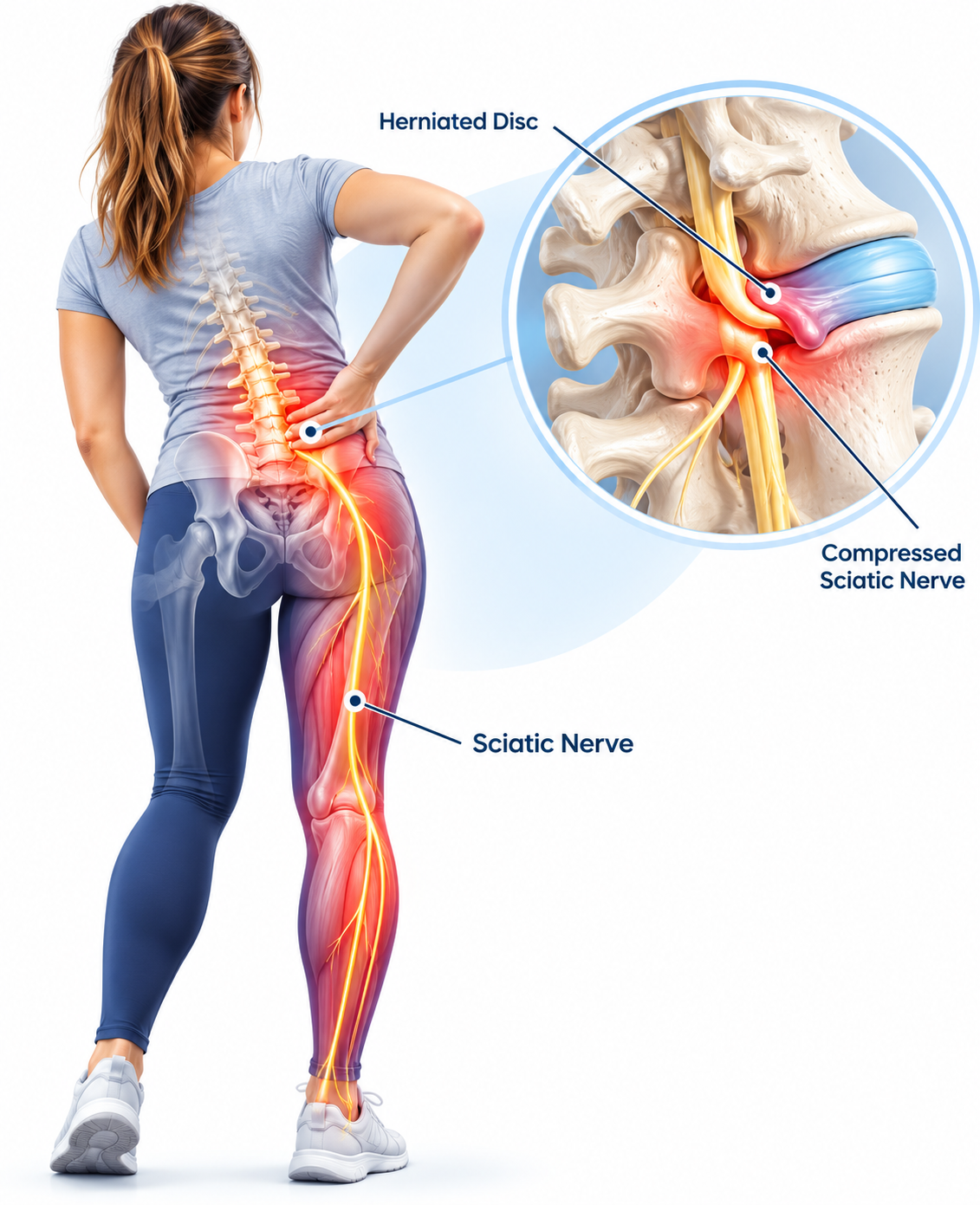
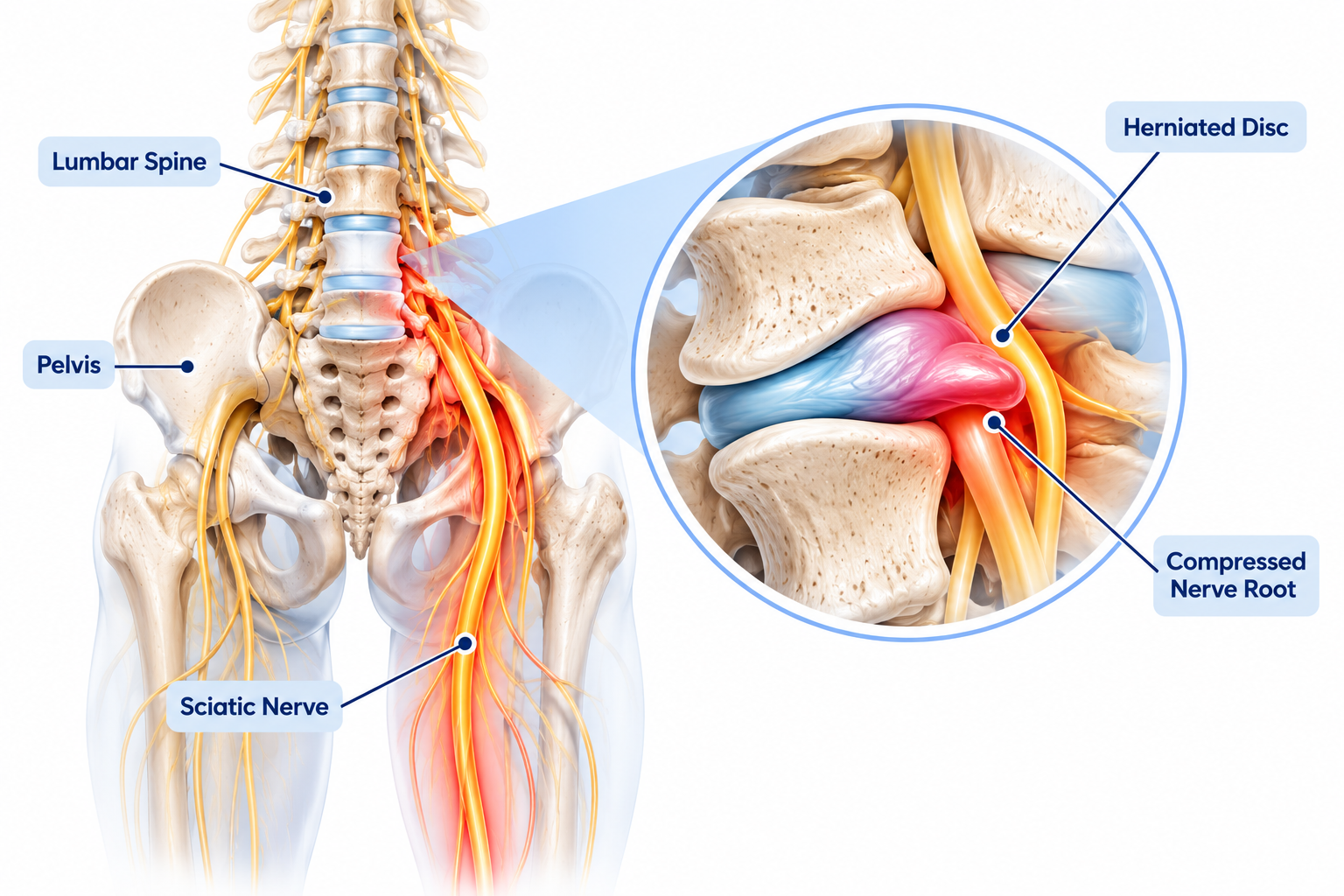
What Is Sciatica?
Sciatica refers to symptoms caused by irritation or compression of the sciatic nerve or its nerve roots.
The sciatic nerve is the largest nerve in the body, extending from the lower back through the hips and buttocks and down each leg.
When the nerve roots or sciatic nerve become irritated, symptoms may develop along its pathway. Sciatica typically affects one side of the body, although symptoms can vary depending on the underlying cause.
Understanding what may be contributing to your symptoms is an important step toward determining the most appropriate care.
Common Signs and Symptoms of Sciatica
Sciatic nerve irritation can feel different from one person to another. Symptoms may range from mild discomfort to pain that interferes with everyday activities.
Radiating Leg Pain
Discomfort that travels from the lower back or buttock down the leg.
Burning or Shooting Pain
Sharp, burning, or electric-like sensations along the nerve pathway.
Muscle Weakness
Difficulty moving the leg or foot normally.
Lower Back Pain
Discomfort in the lower spine that may accompany sciatic symptoms.
Tingling
Pins-and-needles sensations in the leg or foot.
Numbness
Reduced sensation in parts of the leg or foot.
What Causes Sciatica?
Sciatica can develop when the nerve roots in the lower spine or the sciatic nerve itself become irritated or compressed. Several conditions can contribute to these symptoms, and identifying the underlying cause is important when determining an appropriate treatment approach.
Common Causes of Sciatica Include:
Degenerative Disc Changes
As spinal discs change over time, the surrounding structures may also be affected. In some cases, these changes can contribute to nerve irritation or compression.
Spinal Stenosis
Spinal stenosis occurs when spaces within the spine become narrower. In the lower back, this narrowing may put pressure on nerve roots and contribute to radiating leg symptoms.
Herniated or Bulging Discs
Discs between the vertebrae provide cushioning and support. When a disc bulges or herniates, it may irritate or compress nearby nerve roots, potentially causing pain that travels down the leg.
Piriformis-Related Nerve Irritation
The piriformis muscle is located deep in the buttock. In some people, irritation in this region may affect the sciatic nerve and produce symptoms that resemble sciatica.
Spondylolisthesis
This condition occurs when one vertebra slips forward relative to the vertebra below it. Depending on its location and severity, it may narrow the space available for nearby nerves.
How Can Chiropractic Care Help With Sciatica?
At Premier Chiropractic, we understand how disruptive radiating leg pain and other sciatica symptoms can be. Our approach begins with evaluating your symptoms, reviewing your health history, and assessing factors that may be contributing to your discomfort.
Depending on your individual condition, we may recommend a conservative care approach designed to support comfortable movement and everyday function.
Not every case of sciatica has the same cause.
At Premier Chiropractic, our goal is to help you understand the factors that may be contributing to your symptoms and discuss appropriate next steps for your care.
Frequently Asked
Questions
Have questions about sciatica, sciatic nerve discomfort, and chiropractic care? Explore some of our most frequently asked questions or contact our team to learn more.
Contact UsWhat causes sciatica?
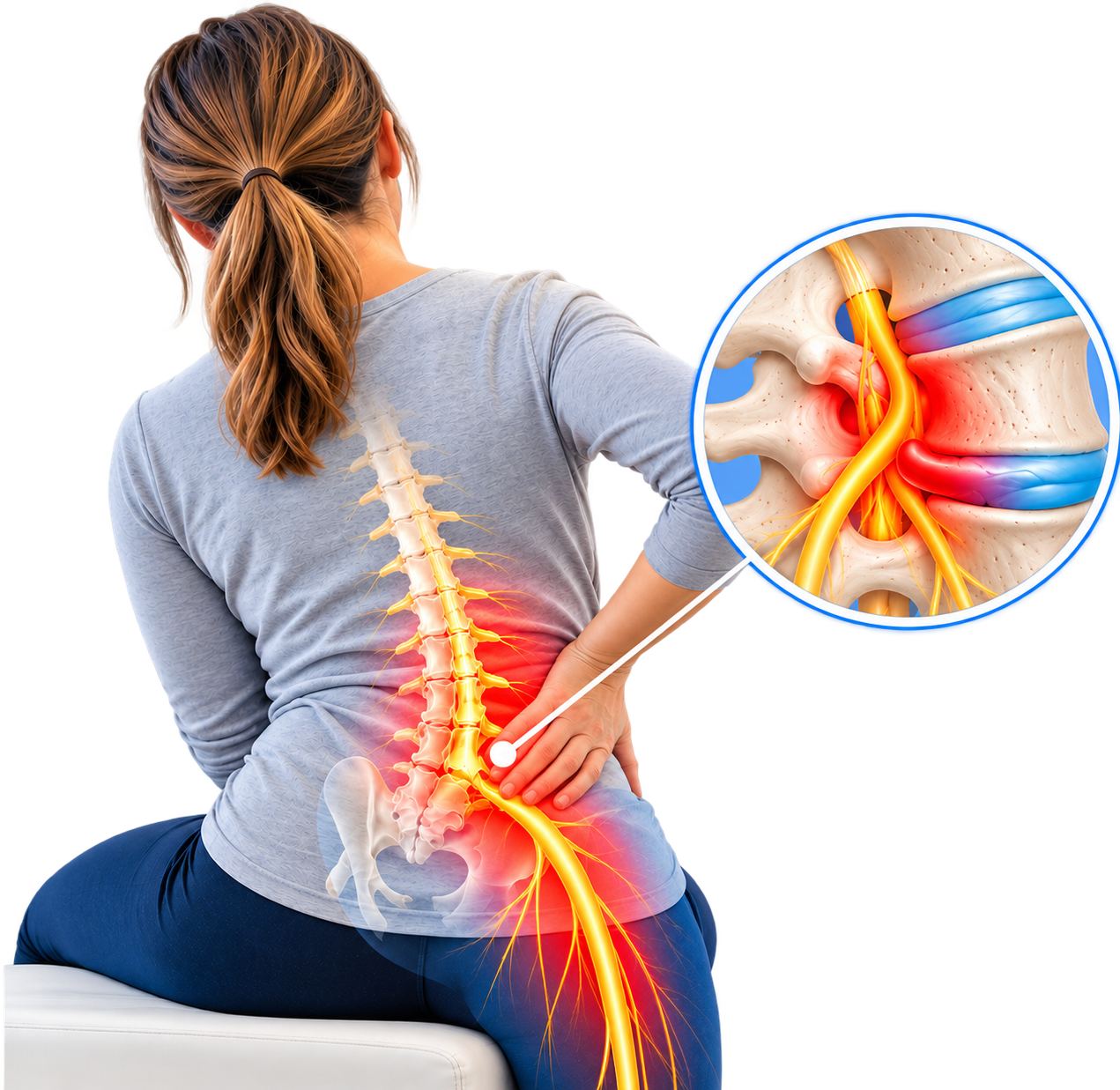
Sciatica occurs when nerve roots contributing to the sciatic nerve become irritated or compressed. Common contributing factors include herniated discs, spinal narrowing, and certain degenerative changes in the lower spine. An evaluation can help identify the possible cause of symptoms.
What are the most common symptoms of sciatica?
Common sciatica symptoms include discomfort that travels from the lower back or buttock into the leg, sometimes extending toward the foot. Tingling, numbness, burning sensations, or muscle weakness may also occur. Symptoms often affect one side of the body.
Can a chiropractor help with sciatica?
Chiropractic care may be considered for certain individuals experiencing sciatica. Depending on the underlying cause, your chiropractor may recommend appropriate manual techniques, movement guidance, or rehabilitation exercises. Some conditions require medical evaluation or referral.
How long does sciatica usually last?
Sciatica symptoms may improve within several weeks, although recovery varies depending on the underlying cause and severity. Some individuals experience symptoms for longer periods or have recurring episodes. Persistent or worsening symptoms should be evaluated by a healthcare professional.
Is walking good for sciatica?
Gentle walking may help some individuals maintain mobility and avoid prolonged inactivity. However, activity tolerance varies, and certain movements may increase symptoms. Start with comfortable distances and adjust activity based on your symptoms and professional guidance.
Can spinal decompression help with sciatica?
Non-surgical spinal decompression may be considered for selected individuals with certain disc-related conditions. However, research on its effectiveness for sciatica is mixed, and it is not appropriate for everyone. An evaluation can help determine whether it may be a suitable option for your needs.
When should I see a chiropractor for sciatica?
If sciatica symptoms persist, recur, or interfere with daily activities, a professional evaluation may help determine appropriate next steps. Seek emergency medical attention for new bowel or bladder dysfunction, numbness around the groin, or rapidly worsening leg weakness.
Can sciatica come back after treatment?
Yes. Sciatica symptoms can sometimes return, particularly when underlying contributing factors remain present. Appropriate movement habits, strengthening exercises, and individualized care recommendations may help support spinal function and reduce certain risk factors, although recurrence cannot always be prevented.
Ready to Take the Next Step Toward Better Mobility?
Sciatica symptoms can make everyday activities challenging. At Premier Chiropractic, we provide personalized evaluations to help you better understand your symptoms and explore appropriate chiropractic care options.
Schedule an Appointment